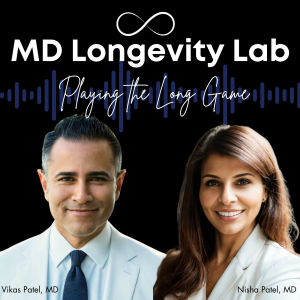
MD Longevity Lab: Playing the Long Game
The MD Longevity Lab Podcast is a must-listen for anyone looking to optimize their health and longevity.... without turning it into a full-time job. Hosted by husband-and-wife physicians, Dr. Vikas Patel, MD, and Dr. Nisha Patel, MD, this dynamic series blends cutting-edge medical science with practical, real-world solutions for busy people who want to live longer, healthier lives.
With their combined expertise in medicine and lifestyle, Dr. Vikas and Dr. Nisha offer a refreshing, no-nonsense approach to longevity—cutting through the noise and delivering simple, effective strategies that actually fit into your life. Each episode explores the latest research, breakthrough treatments, and easy-to-implement habits that make a real impact on your health.
They believe that small, daily deposits into your ’health bank account’ compound over time, leading to massive long-term gains. Whether it’s a quick lifestyle tweak, a science-backed tip, or a groundbreaking medical insight, their goal is to help you make longevity sustainable and achievable.
If you’re tired of health advice that feels overwhelming or impossible to sustain, the MD Longevity Lab Podcast is here to change the game. Tune in and discover how small, consistent changes can lead to big results—because at MD Longevity Lab, we are playing the long game. For more information visit them at www.mdlongevitylab.com
Disclaimer:
This podcast is for informational purposes only and does not constitute medical advice. No doctor-patient relationship is established by listening. Please consult your own physician or healthcare provider before making any medical decisions or starting any new exercise or health program.





MD Longevity Lab
Want to get a bird's eye view of your healthspan?
Schedule your longevity testing today. Call or text 224-208-3720 or visit us at www.mdlongevitylab.com to get started.
Episodes

Dec 25, 2025
Dec 25, 2025
1 hr 15 min
In this episode of MD Longevity Lab: Playing the Long Game, Drs. Nisha and Vikas Patel sit down with world-leading aging researcher Dr. Matt Kaeberlein to cut through the noise in longevity medicine.
We discuss why most biological aging clocks fall short, what mTOR actually does, how rapamycin works (and why it’s widely misunderstood), what truly moves the needle for healthspan, and where AI and preventive medicine are headed.
This is an evidence-based conversation focused on clarity, nuance, and long-term thinking—without the hype.
Topics Covered
Why biological aging clocks are unreliable at the individual level
mTOR explained and its role in aging biology
Rapamycin: risks, benefits, and unknowns
Fasting and caloric restriction myths
What actually improves healthspan (exercise, sleep, connection, hormones)
AI, wearables, and the future of longevity care
The Dog Aging Project and slowing aging in companion animals
About Our Guest
Dr. Matt Kaeberlein, PhD is a world-renowned scientist in the biology of aging, founder of Optispan, and co-founder of the Dog Aging Project. He is known for prioritizing evidence over hype and for advancing translational longevity science.
Links & Resources
Follow Dr. Matt Kaeberlein: @mkaeberlein
Optispan & the Optispan Podcast:https://www.optispan.comhttps://www.youtube.com/@optispanInstagram: @optispan_
Dog Aging Institute (501(c)(3) nonprofit):https://www.dogaginginstitute.org
MD Longevity Lab:https://www.mdlongevitylab.com
Watch on YouTube (MD Longevity Lab Podcast):https://www.youtube.com/@MDLongevityLab
Dr. Kaeberlein also hosts the Optispan Podcast, available on YouTube and all major podcast platforms. If you’d like to support his valuable work advancing longevity science in companion animals, donations to the Dog Aging Institute (a 501(c)(3) nonprofit) are tax-deductible and help make this research possible.
Dec 11, 2025
Dec 11, 2025
1 hr 6 min
Episode Summary
Peptides are everywhere right now — online, in wellness clinics, and all over TikTok. But what’s real? What’s risky? And what actually supports longevity? In this episode, Dr. Nisha and Dr. Vikas break down the hype vs. the science, explain why the Five Pillars of Longevity (Lift, Move, Sleep, Fuel, Connect) always come first, and walk through the peptides patients ask about most.
Key Takeaways
The Five Pillars come first.No peptide replaces strength training, daily movement, sleep, nutrition, or connection. Peptides amplify biology — they don’t repair a broken foundation.
GLP-1 is the only peptide with strong human data.Semaglutide and tirzepatide have large trials, years of safety data, and real cardiometabolic benefits — but they do not protect muscle, so lifting and protein matter.
Growth hormone secretagogues (CJC-1295, Ipamorelin, Tesamorelin) carry higher uncertainty.Only tesamorelin is FDA-approved. Long-term data in healthy adults is lacking. There are theoretical cancer risks and concerns around worsening insulin resistance.
Fat-burning peptides are mostly hype.AOD-9604 has minimal human benefit. 5-Amino-1MQ has no human trials.If fat loss is the goal: Lift, Move, Sleep, Fuel.
Healing peptides (BPC-157, TB-500) are interesting but early.Most data is rodent-based, purity varies widely, and angiogenesis pathways carry theoretical risks.
Cognitive peptides (Semax, Selank) are not approved in the US/EU.Human data is weak. Possible side effects exist. They won’t override poor metabolic health.
Cosmetic peptides like GHK-Cu have some human data.But sunscreen still outperforms everything.
MOTS-c is promising but very early in humans.Rodent data is strong — human data is sparse.
NAD is not a peptide.It plays a key cellular role but has limited clear measurable benefit when supplemented.
The TikTok peptide culture is unsafe.If your peptide has no certificate of analysis or arrives with a free sticker, it’s not longevity — it’s roulette with a needle.
Bottom Line
Peptides are tools, not shortcuts. GLP-1s have real evidence; most others range from early to uncertain. The Five Pillars determine your healthspan — and peptides only work when those fundamentals are solid.
Cliff Notes
Lift for longevity.Move for metabolism.Sleep to repair.Fuel your cells.Connect with real humans.Peptides don’t replace the pillars — ever.
Disclaimer
This episode is for educational and informational purposes only. It is not medical advice, does not establish a doctor–patient relationship, and should not be used as a substitute for individualized medical guidance.
Follow us on social @MDLongevityLab Sign up for our newsletter at www.MDLongevityLab.com
Nov 27, 2025
Nov 27, 2025
28 min
In this episode of MD Longevity Lab: Playing the Long Game, Dr. Vikas and Dr. Nisha explore how human connection and gratitude act as powerful, evidence-based tools for both mental health and longevity. They unpack the evolutionary origins of our social brain — from Dunbar’s number to cooperative child-rearing — and explain why humans are biologically wired to thrive in community. The episode highlights the growing loneliness epidemic and how social isolation increases mortality risk, drives chronic stress, and directly contributes to depression. Drawing on neuroscience, they discuss how connection improves oxytocin, serotonin, dopamine, inflammation, and default mode network activity, while loneliness dysregulates these pathways.
The conversation then turns to gratitude, including new research showing it reduces anxiety and depression, improves cardiovascular health, and continues to strengthen benefits over time. Gratitude letters, journaling, and “gratitude spotting” are presented as accessible, clinically meaningful practices — especially for patients with depression. The hosts also connect ancient Stoic wisdom to modern mental health strategies, showing how reframing, acceptance, and intentional connection have always been part of human resilience. The episode closes with practical “prescriptions” anyone can try: reach out to one person, practice a moment of gratitude, and build small daily habits that strengthen social bonds and mood. This Thanksgiving, the Patels remind us that while VO₂ max, DEXA scans, and biomarkers matter, the relationships and experiences we cultivate are equally essential for healthspan — and often the true foundation of emotional well-being.
Nov 13, 2025
Nov 13, 2025
1 hr 4 min
💡 Episode Summary
In this powerful episode, Drs. Nisha and Vikas Patel explore why exercise is the single most effective longevity intervention—and how to train smarter, not harder.They break down the science, the four essential exercise pillars for long-term health, and a practical weekly blueprint for busy people who want to look, feel, and perform their best for decades to come.
With their signature mix of science, humor, and real-life banter (including a chaotic “family gym day” gone sideways), the Patels show how movement truly is medicine—and how to make it part of your lifestyle for life.
🧬 Key Topics Covered
1️⃣ The Science of Exercise and Longevity
Why exercise is more powerful than any drug for reducing all-cause mortality
VO₂ max as the #1 predictor of lifespan and healthspan
How muscle acts as a metabolic organ—regulating glucose, inflammation, and hormones
Mitochondrial health and aging — why Zone 2 training keeps your “cellular batteries” young
Exercise and brain health — boosting BDNF and reducing dementia risk by up to 40%
The dose–response effect: why even 75 minutes a week can cut mortality risk by 25%
2️⃣ The Four Pillars of Exercise for Longevity
Pillar 1 – Zone 2 Cardio: Your aerobic foundation
Builds mitochondrial density and fat oxidation
Zone 2 = “talk but can’t sing” pace (60–70% max HR)
45–60 minutes, 2–4 times per week
Pillar 2 – VO₂ Max / High-Intensity Training: Your lifespan booster
Short intervals (85–95% max HR) once per week
4 × 4-minute or 8 × 2-minute protocols with rest
Improves cardiorespiratory fitness and longevity
Pillar 3 – Strength Training: Your anti-aging insurance policy
Prevents sarcopenia (3–8% muscle loss per decade after 30)
Builds bone density, metabolic health, and functional strength
Focus on compound lifts (squat, deadlift, press, row) 2–3 × per week
Grip strength as a biomarker of vitality
Pillar 4 – Stability / Mobility / Balance: Your fall-prevention plan
Improves coordination, joint health, and independence
10–15 minutes, 3–4 × per week or as warm-ups
Sitting-rising test as a quick functional fitness check
3️⃣ How to Structure Your Week
Minimum effective dose: 150 min moderate cardio + 2 strength sessions weekly
Optimal: 200 + min cardio (Z2 + HIIT) + 3 strength sessions + mobility work
Prioritize consistency > perfection
Recovery = training — sleep, nutrition, and rest drive adaptation
Active recreation counts (sports, hikes, tennis, dancing)
4️⃣ Common Pitfalls to Avoid
Doing only one type of exercise (runners who never lift or lifters who never do cardio)
Misjudging intensity — pushing too hard on easy days, too easy on hard days
Neglecting recovery and sleep
All-or-nothing thinking — consistency trumps perfection
Women avoiding heavy weights — critical for bone and metabolic health
5️⃣ Special Populations & Modifications
Beginners: Start with walking + bodyweight work 3–4×/week
Older Adults: Strength & balance become top priorities
Injury or chronic conditions: Modify, don’t quit—swim, cycle, resistance bands
Women: Focus on RPE (rate of perceived exertion) to adjust training through menstrual and menopausal changes
✅ Action Steps
Assess your baseline: Which pillars are you missing?
Start with the minimum effective dose: 3–4 workouts a week beats none.
Track one metric: VO₂ max, grip strength, sitting-rising score, or resting HR.
Schedule it: Put workouts on your calendar like doctor’s appointments.
Make it fun and sustainable: Pick activities you actually enjoy.
🔊 Key Takeaways
Exercise is the closest thing we have to a longevity drug.
Cardio + Strength + Mobility = Longer life and better life.
Longevity isn’t about quick fixes—it’s about playing the long game.
🌐 Resources & Links
Learn more at www.MDLongevityLab.com
Follow @MDLongevityLab on Instagram & LinkedIn for daily tips
Subscribe to the podcast on Apple Podcasts & Spotify
⚠️ Disclaimer
This podcast is for educational and informational purposes only and does not constitute medical advice. Always consult your own physician before starting any new exercise or health program.
Oct 30, 2025
Oct 30, 2025
32 min
Protein isn’t just for bodybuilders — it’s the longevity macronutrient. In this episode, Drs. Nisha and Vikas Patel break down why protein is essential for muscle, metabolism, and long-term health — and how outdated dietary guidelines have been underselling its importance for decades.
From the science of muscle protein synthesis and turnover to practical strategies for hitting your protein goals (without turning your life into a spreadsheet), this episode separates myth from mechanism and gives you a roadmap for optimizing your nutrition for healthspan.
The Role of Protein in LongevityProtein is more than a muscle nutrient — it’s a marker of aging and resilience. Higher lean body mass predicts lower risk of cardiovascular disease, dementia, and all-cause mortality. Your body replaces roughly 250–300 grams of protein daily through constant turnover. Without enough dietary intake and resistance training, that process breaks down, leading to loss of function and vitality over time.
Why the RDA Is OutdatedThat familiar 0.8 g/kg recommendation? It was based on old data aimed at preventing malnutrition, not optimizing health. Most adults need closer to 1–1.6 g/kg, or roughly 1 gram per pound of ideal body weight. Too many adults over 40 barely hit the minimum, leading to preventable loss of lean mass, slower metabolism, and higher visceral fat. Aging isn’t the only culprit — under-protein-ing and under-movement are.
Protein and MetabolismProtein burns more calories to digest than carbs or fats, and muscle acts as a glucose sponge, stabilizing blood sugar and reducing inflammation. It also improves satiety by regulating hunger hormones, so before you reach for appetite suppressants, check your plate — protein first makes a big difference.
Plant vs. Animal ProteinAnimal proteins contain all nine essential amino acids, especially leucine, which triggers muscle protein synthesis. Plant-based diets can work beautifully too — they just require more planning and variety. Combine lentils with quinoa, beans with rice, or tofu with edamame to get a complete amino acid profile. A “climate-conscious omnivore” approach can balance health, ethics, and sustainability.
Myth BustingHigh protein doesn’t damage kidneys in healthy individuals.You can absorb more than 30 grams per meal — that number just refers to the amount that maximally stimulates muscle building.And no, protein won’t make you bulky — you’d need years of heavy training for that.
Protein Timing and Real-World TipsConsistency matters more than timing. Hitting your daily protein goal within 24 hours of a workout is what counts — not whether you drink a shake within an hour. Whey protein powder might be technically “ultra-processed,” but it’s a functional one — a tool to help you meet your goals efficiently.
Real Talk: Balance and LongevityMost adults under-eat protein and overeat processed carbs. The result is fatigue, poor recovery, more visceral fat, and faster muscle loss. Focus on building your plate intentionally — start with a palm-sized portion of protein, then veggies, then carbs. For those in their 40s and beyond, this is especially crucial. Older adults need more protein, not less, to offset anabolic resistance. For women, especially post-menopause, adequate protein supports bone density, muscle retention, and metabolic health.
Practical TakeawaysAim for around 1 gram of protein per pound of ideal body weight.Distribute it evenly across your meals — 30 to 40 grams each.Pair it with regular resistance training for the biggest payoff.Choose quality over perfection — whole foods first, supplements as needed.Longevity is about progress, not perfection.
Closing ThoughtsThe RDA is outdated. Aim higher, eat intentionally, and think long-term. You don’t need to be perfect — you just need to be consistent. Longevity isn’t about restriction; it’s about fueling your future.
Get in touchFollow us on Instagram @MDLongevityLab and share this episode with someone who still skips breakfast — because you’re not saving calories, you’re just starving your muscle. Visit us at www.mdlongevitylab.com
Oct 16, 2025
Oct 16, 2025
49 min
💡 Episode Overview
In this no-BS crash course, the doctors cover testosterone. Testosterone is one of the most misunderstood and overhyped hormones in medicine today. Often labeled as a “male hormone,” testosterone actually plays a critical role in both men and women—impacting energy, mood, cognition, bone density, muscle mass, and metabolic health. Despite its importance, research shows a concerning trend: average testosterone levels have declined by 20–25% over the past few decades, even after adjusting for age. A man in his 40s today typically has the testosterone levels of a man in his 30s a generation ago. This generational drop is not simply a reflection of aging but a sign of broader environmental and lifestyle influences. Chronic stress, poor sleep, rising obesity rates, sedentary behavior, and widespread exposure to endocrine disruptors such as BPA and pesticides all contribute to suppressed hormone production and disrupted balance.
In this episode, Drs. Nisha and Vikas Patel take an evidence-based look at testosterone through the lens of longevity and preventive medicine. They discuss the physiology of testosterone, common symptoms of deficiency, and why so many people are being overdiagnosed or overtreated through aggressive testosterone replacement therapy (TRT) without proper evaluation. Many commercial “Low T” clinics skip essential lab work and fail to address the underlying causes of hormonal decline. This approach not only risks suppressing the body’s own testosterone production but can also lead to long-term dependency, infertility, and cardiovascular complications. The episode emphasizes that sustainable optimization starts with addressing foundational health behaviors—improving sleep quality, reducing visceral fat, managing stress, engaging in resistance and high-intensity interval training, ensuring adequate protein and micronutrient intake, and minimizing alcohol and environmental toxins.
Dr. Nisha and Dr. Vikas also share a real-life case study of a 45-year-old father who arrived at their clinic exhausted and convinced he needed lifelong TRT. Instead, through a structured plan focusing on exercise, nutrition, and recovery, his testosterone increased naturally from the low 300s to the mid-500s ng/dL—without injections or medication. This story illustrates that low testosterone is often a reflection of lifestyle dysfunction, not irreversible endocrine failure. The message is clear: before resorting to external hormone therapy, identify and correct the root causes of imbalance.
As Dr. Nisha explains, “You can’t inject your way to better health. Sustainable hormone optimization begins with the fundamentals—sleep, nutrition, exercise, and stress resilience.” For patients considering TRT, medical supervision and ongoing monitoring are essential to ensure both safety and long-term well-being. Ultimately, the goal isn’t just to raise a number on a lab report—it’s to restore balance, vitality, and functional longevity.
🎧 Listen on Apple Podcasts, Spotify, or any major platform.Visit www.MDLongevityLab.com to learn more about our precision medicine approach to healthspan optimization.
(This content is for educational purposes only and is not a substitute for individualized medical advice or treatment.)
📩 Connect with Us
Website: www.MDLongevityLab.comInstagram: @MDLongevityLabDisclaimer: This podcast is for educational purposes only and does not replace personalized medical care. Please consult with your physician.
Oct 2, 2025
Oct 2, 2025
33 min
Episode Summary
Perimenopause isn’t just about hot flashes. It’s a full-body transition that impacts your brain, bones, muscles, metabolism, heart, skin, sleep, and more. In this episode, Dr. Nisha Patel and Dr. Vikas Patel break down the science, the physiology, and the real-life experience of navigating perimenopause and menopause.
Expect some real talk (and a few laughs), plus data and strategies you won’t hear in most doctor’s offices. Whether you’re going through this transition yourself—or love someone who is—this episode is for you.
What You’ll Learn in This Episode
What perimenopause and menopause actually are — and why they affect everyone, directly or indirectly
Why women’s health was ignored in research for decades and how that impacts care today
How estrogen and progesterone decline affects every organ system — from brain fog and mood swings to bone density and cardiovascular risk
Category deep dive:
Lean muscle loss and why resistance training is non-negotiable
Bone density decline and why waiting until 65 for a DEXA is too late
Visceral fat, inflammation, and midsection weight gain
Lipid shifts, insulin resistance, and rising cardiovascular risk
Libido, sexual health, and the confidence factor
Metabolic health and increased diabetes risk
Skin and hair changes tied to collagen loss
Brain health, dementia risk, and why your dumbbells double as memory care
Sleep disruption, TikTok “fixes,” and what actually helps
What you can do proactively in your 30s, 40s, and beyond to optimize this transition
The role of nutrition, resistance training, supplements, and HRT (as the “power steering,” not the whole car)
Why This Matters
👉 Half the population will go through menopause.👉 The other half will be deeply impacted by someone who is.👉 Yet women’s health has been under-researched and under-treated for decades.
This episode arms you with the knowledge and tools to move past suffering-in-silence and into thriving-with-intention.
Listen & Subscribe
🎧 Listen to the full episode on:
Apple Podcasts
Spotify
If this episode resonated with you, share it with a friend, leave us a review, and subscribe so you never miss an episode.
✨ Menopause isn’t the end—it’s a transition. With the right tools, it can be empowering.
Contact Us
📞 Call/Text: 224-208-3720📧 Email: info@MDLongevityLab.com🌐 Visit: MDLongevityLab.com
MD Longevity Lab Disclaimer
This podcast is for educational purposes only and is not intended as medical advice. The information shared represents the opinions of Dr. Nisha Patel and Dr. Vikas Patel and is not a substitute for personalized medical care. Always consult your physician or qualified healthcare provider before making changes to your health, medications, or treatment plan.
Sep 18, 2025
Sep 18, 2025
46 min
Episode Summary
In this episode of the MD Longevity Lab Podcast: Playing the Long Game, Dr. Vikas Patel and Dr. Nisha Patel dive deep into the impact of diabetes and impaired glucose tolerance on long-term healthspan. They unpack the hidden dangers of elevated blood sugar, why so many people are unaware they’re at risk, and how the economic burden of diabetes affects not just individuals but the entire healthcare system.
The conversation highlights the power of early detection, lifestyle interventions, and modern tools like continuous glucose monitors in reversing course before complications set in. From nutrition and exercise to cutting-edge medications, this episode equips listeners with practical strategies to take control of their metabolic health.
Key Topics Covered
The Scope of the Problem: Nearly 50% of American adults are affected by diabetes or pre-diabetes, yet 80% of pre-diabetics don’t even know it.
The Hidden Costs: Diabetes costs the U.S. economy an estimated $327 billion annually in healthcare spending and lost productivity.
Biological Mechanisms: High glucose levels drive glycation, which damages blood vessels and accelerates aging.
Long-Term Risks: Diabetes increases the risk of dementia by 60–70%, along with higher rates of cardiovascular disease, kidney disease, and blindness.
Prevention Works: Lifestyle changes—such as diet improvements and exercise—can reduce diabetes risk by 58%.Nutrition Insights: Adequate protein intake is critical for stabilizing blood sugar and preserving muscle mass.
Exercise & Insulin Sensitivity: Strength training and regular activity improve glucose uptake and metabolic flexibility.
Technology in Action: Continuous glucose monitors (CGMs) offer real-time feedback, empowering smarter food and lifestyle decisions.
Therapeutic Support: Medications like metformin and GLP-1 receptor agonists play an important role for certain patients.
Key Takeaways
Diabetes is widespread but often undiagnosed.
Glycation damages vessels and accelerates aging.
Early detection and intervention can dramatically alter outcomes.
Nutrition, exercise, and technology are powerful tools for prevention.
Medications can support—but not replace—lifestyle changes.
📩 Contact Us: Want to learn more about your own metabolic health? Reach out at MD Longevity Lab Www.mdlongevitylab.com
⚠️ Disclaimer: This podcast is for informational and educational purposes only and is not intended as medical advice. Please consult your healthcare provider before making any changes to your health, medications, or lifestyle.
Sep 4, 2025
Sep 4, 2025
50 min
Heart Health & Longevity: Cardiovascular Disease, Lp(a), and Smarter Testing
Summary
Cardiovascular disease (CVD) remains the #1 killer in America—claiming one life every 36 seconds and costing the U.S. economy over $365 billion annually. But here’s the hopeful truth: much of it is preventable.
In this episode, Drs. Nisha and Vikas Patel take you on a practical, evidence-based deep dive into heart health. From sobering statistics and risk factors to advanced screening tools and new therapies, this conversation will leave you with a clear roadmap for protecting your most vital organ. And yes, there’s humor too—because talking about stents, statins, and stress tests doesn’t have to be dry.
What You’ll Learn:
The Scope of the Problem
655,000 Americans die annually from CVD.
126 million adults are living with some form of CVD.
Annual cost exceeds $365 billion (medical care + lost productivity).
Risk Factors
Non-modifiable: age, sex, genetics, family history.
Modifiable: high blood pressure, high LDL/ApoB, diabetes, smoking, inactivity, and excess visceral fat.
Why hypertension is called the “silent killer” and why new guidelines lowered the bar to 130/80.
Why we now prioritize ApoB over LDL cholesterol.
Pathophysiology Simplified
How atherosclerosis develops from endothelial damage to plaque rupture.
Why the most dangerous plaques aren’t always the most narrowed.
The role of inflammation and what the CANTOS trial taught us.
Advanced Screening Tools
ApoB testing for particle number.
Coronary artery calcium (CAC) scoring: score of 0 = low risk; >400 = high risk.
CT angiography: visualizing both calcified and non-calcified plaque.
The Lipoprotein(a) Deep Dive
Elevated in ~20% of people, but rarely measured.
Doubles coronary heart disease risk, increases risk of aortic stenosis and stroke.
Almost entirely genetic, unaffected by diet/exercise/statins.
New therapies in clinical trials could reduce levels by 80–90%.
Until then: double down on controllable risk factors.
Evidence-Based Risk Reduction
Diet: Mediterranean diet lowers major CV events by 30% (PREDIMED trial).
Exercise: 150 minutes/week of moderate activity = 30% lower CV mortality.
Medications:
Statins: 20–25% reduction in CV events.
Ezetimibe & PCSK9 inhibitors: powerful LDL lowering, though costly.
Blood pressure meds: effective across multiple classes—choice matters less than control.
Practical Implementation
Know your numbers: LDL, ApoB, Lp(a), BP, A1c, VO₂ max, visceral fat.
Get a baseline with advanced screening (DEXA, CAC, CT).
Build habits: strength training + cardio, Mediterranean-style nutrition, stress and sleep hygiene.
Medications when appropriate—don’t let “perfect” be the enemy of good.
Call to Action
CVD prevention is not just possible—it’s powerful. Know your numbers, track your risks, and take proactive steps to protect your heart.
At MD Longevity Lab, we use tools like VO₂ max testing, full-body DEXA, ApoB and Lp(a) labs, and calcium scoring to create personalized heart health strategies. Don’t wait for a cardiac event—get ahead of the game.
Aug 21, 2025
Aug 21, 2025
44 min
When it comes to aging well, most of us focus on numbers like weight, blood pressure, orcholesterol. But the real predictors of how well you’ll live into your 60s, 70s, and 80s often havenothing to do with the doctor’s office—and everything to do with how your body moves today. In this episode of MD Longevity Lab: Playing the Long Game, Drs. Vikas and Nisha Patel walk you through nine simple, science-backed tests that you can do at home (or at your local gym) to measure your strength, mobility, endurance, and balance. These are the metrics that matter most when it comes to healthspan—the number of years you stay healthy, strong, and independent—not just lifespan.The reality? In the U.S., men live on average to age 76 and women to 80, but the healthyyears—our healthspan—end almost two decades earlier. That means the average Americanspends the last 20% of life in physical decline. Worse, the U.S. has the largest gap between healthspan and lifespan of any of the 187 countries studied. But it doesn’t have to be that way.Inside This Episode You’ll Learn:● The difference between healthspan and lifespan—and why aiming for “average” isn’tgood enough.● Why these nine tests matter: how VO2 max, grip strength, and balance aren’t justfitness measures—they’re predictors of heart disease, dementia, falls, and all-causemortality.● Benchmarks and targets: what’s “average” for a 40-year-old vs. what it takes to be inthe top 25% or even top 10%.● The power of small wins: how starting at 3 seconds on a dead hang or a 15-minutemile is perfectly normal—and how progress over months and years compounds into reallongevity gains.● Real talk from your hosts: Nisha’s first pull-up victory (and why no one was there tocheer), Vikas’s breakdown of VO2 max decline with age, and the playful back-and-forththat makes these serious topics relatable.
️The 9 Longevity Tests Covered:1. 1-Mile Run – a proxy for VO2 max, one of the strongest predictors of healthspan andlifespan.
2. Dead Hang – measures grip and upper body strength, closely linked to fall risk,dementia, and even all-cause mortality.3. Pull-Ups – tests upper body strength-to-weight ratio and neuromuscular resilience.4. Push-Ups – a surprisingly strong predictor of cardiovascular health and endurance.5. Farmer’s Carry – a real-world strength and posture test (think: carrying all yourgroceries in one trip).6. Wall Sit – builds quad and glute endurance, protecting against falls and fractures.7. Air Squats – a functional test of lower-body strength and mobility.8. Sit-to-Stand from Floor – reflects total-body coordination and strength; those who cando 8–10 reps have significantly lower mortality risk.9. Single-Leg Balance – predicts fall risk and even cognitive decline; holding less than 10seconds is linked to an 84% higher risk of all-cause mortality.
Why It MattersThese tests are free, repeatable, and take just a few minutes. More importantly, they measurewhat truly counts: your ability to function independently as you age. Low scores aren’t averdict—they’re a roadmap. Research shows that whether it’s VO2 max, grip strength, orbalance, all of these metrics are modifiable with consistent training.And remember: most adults in their 40s struggle with several of these tests. That’s okay. Thepoint isn’t perfection, it’s progress. As Nisha puts it: “We aren’t aiming for normal aging—we’reaiming for optimal aging. And optimal doesn’t mean perfect. It just means moving forward.”Key Stats Shared in This Episode● Being in the top 25% for VO2 max translates to nearly a 300% lower mortality riskcompared to the bottom 25%.● Every 5 kg drop in grip strength raises mortality risk by 16%, and weak grip strength islinked to a 72% higher risk of dementia.● Failing to hold a single-leg balance for 10 seconds is associated with an 84% higherrisk of all-cause mortality.
● 40+ push-ups is linked to a 96% lower risk of cardiovascular disease.
👉 These aren’t hurdles, they’re habits. Start with one test, track your progress every fewmonths, and celebrate the small wins. Over time, those add up to decades of vitality.Tag us with your results—we’d love to cheer you on. And share this episode with someone intheir 40s, 50s, or beyond who wants to stay strong, independent, and functional for life.